





Latest >
- GCUT held the Academic Festival 2026 themed on Science and Technology
- GCUT's opening ceremony: a new journey begins
- GCUT passed the review process of renewing IACBE's Specialized Business Accreditation
- President Su Cheng led GCUT's delegation to pay a visit to ISCTE and JOINCO in Portugal
- A work of GCUTer was listed in the Top 300 of the iF Design Student Award 2026
- GCUT held a Comprehensive Job Fair for its graduates from the Class of 2026
- Students from GCUT's International Business School took an active part in the 139th China Import and Export Fair
- GCUT held a seminar on developing its industrial colleges to promote deep industry-education integration and boost its high quality development
- Changes brought by integrating AI into curriculum in GCUT
- Good news! GCUT received the notification on the result of its evaluation of undergraduate teaching qualifications issued by the General Office of the Ministry of Education of the People's Republic of China
GCUT held a seminar on developing its industrial colleges to promote deep industry-education integration and boost its high quality development
Time:2026-05-09 Page views:66
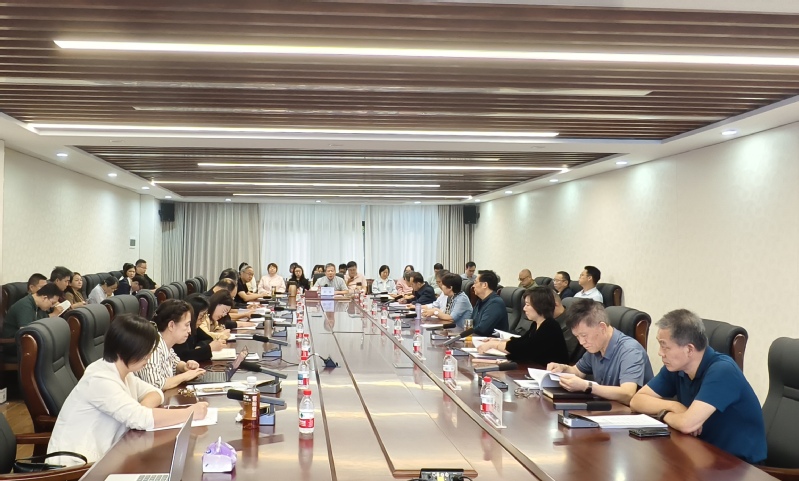
To implement its schemes on high quality development and 15th Five-Year Plan for educational development, Guangzhou City University of Technology (GCUT) held a seminar on developing its industrial colleges in the Meeting Room 210 of GCUT’s Administrative Building on the morning of April 30, which aims to regulate the construction and management of such colleges that are qualified to match national strategies and requirements of regional pillar industries. In this way, it can establish the school-running approaches to industrial colleges featuring independent operation, inter-college (disciplinary) coordination, and deep integration between industry and education while advancing its modifications based on the feedback of its evaluation of undergraduate teaching qualifications, thus comprehensively upgrading the quality of talent development and strength of industrial services of industrial colleges. President Su Cheng, Vice President Wei Demin, personnel in charge of its industrial colleges and schools, and related administrative departments as well as related staff attended the seminar, which was hosted by Director Liu Jia of the Office of Undergraduate Teaching Evaluation.
Centering around GCUT’s industry-education integration and future development of industrial colleges, President Su proposed an overall plan from three perspectives, namely, backgrounds of deep industry-education integration, development path of industrial colleges, and reforms of management mechanism. He put forward that the Ministry of Education of the People’s Republic of China planned to implement “Double Outstanding” Project (outstanding school-running level and outstanding contributions to serving regional economic and social development) that deepens the combination between quality of school running and capacity to serve regional development, clarifying the orientation and requirements of building a high-level application-oriented university. GCUT needs to deal with difficulties such as limited approaches to talent development and failing to meet industrial demands dependent on deep industry-education integration. Therefore, it endeavors to enhance its core competitiveness of school running through a path featuring characteristics, differentiation and sustainability based on regional industrial development to avoid “homogeneous competition” among similar universities. He further emphasized that GCUT would promote systematic development from curriculum, faculty, cultivation, teaching materials, professional clusters, industry-study-research platforms, and international cooperation with such industrial colleges as the core of industry-education integration. Moreover, it will improve its organizational structure, operating mechanisms, and reform on management and services to create a new ecology of integration between industry and education that boosts cooperation between GCUT and enterprises as well as interdisciplinary cooperation.
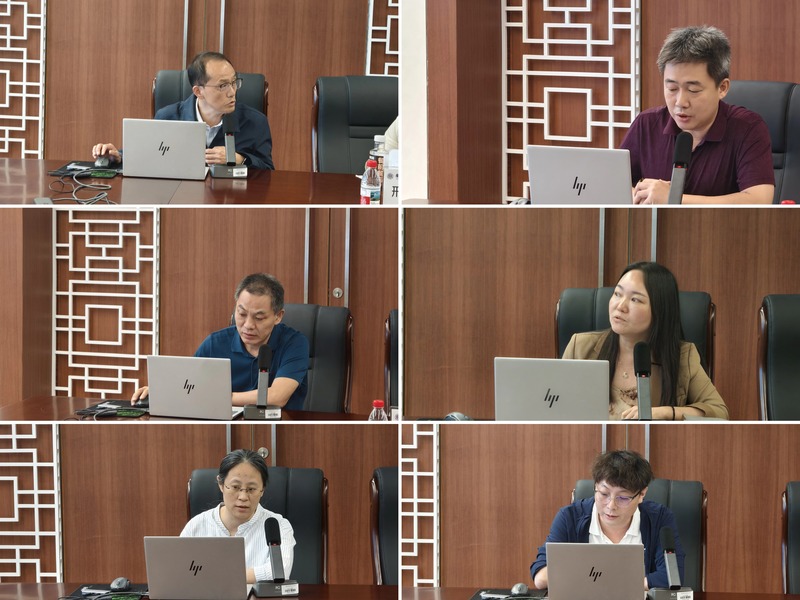
Deans of GCUT’s industrial colleges delivered speeches respectively
Then, deans of six industrial colleges including Institute of Green and Intelligent Transportation Industry and Institute of Intelligent Manufacturing Industry delivered speeches on achievements made in the period, plan of future development, primary tasks of the year 2026, and budget respectively. Participants discussed over key issues such as curriculum of industrial colleges, approaches to measure workload, on-and-off-campus dual-tutor system, accreditation of English medium (bilingual) instruction, construction of colleges of liberal arts and industrial colleges, and resource allocation.
Vice President Wei put forward three expectations for the future development of industrial colleges. Firstly, each industrial college needs to stimulate their own orientation consistent with evaluation standards of demonstration modern industrial colleges of Guangdong province. Secondly, budget planning of industrial colleges should be based on the effects of budget spent in the previous year. Thirdly, related units should concentrate on problems and difficulties appeared during the development of industrial colleges while finding solutions to solve them.
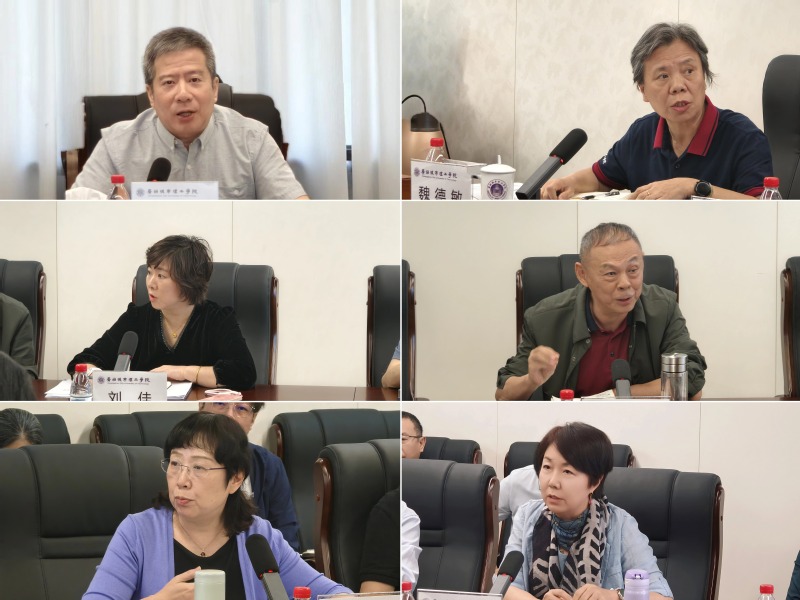
President Su summarized that GCUT’s industrial colleges must develop consistent with GCUT’s industry-education integration, which should also be in line with evaluation standards of demonstration modern industrial colleges of Guangdong province. He emphasized that it was necessary to establish and improve the coordinated talent development mechanism that crosses colleges or disciplines based on GCUT’s features of school running, thus creating a distinctive development path that deeply integrating industry and education.
The seminar comprehensively concludes current conditions and development approaches of GCUT’s industrial colleges, which gathers consensus on the reform of industry-education integration, and makes it clear that their future development goal as well as primary tasks and approaches, thus laying solid foundation for the standard, characteristic, and high-quality development of industrial colleges. In the future, GCUT will redouble efforts to ensure the implementation of related arrangements taking advantage of the seminar, and continue to deepen the reform of management mechanisms, optimize resource allocation and strengthen coordinated talent development between GCUT and enterprises. Consequently, it keeps upgrading its industrial colleges’ school-running level and capacities in serving regional economic and social development, supporting GCUT’s high quality development and smooth implementation of its 15th Five-Year Plan.